A Summer on the Solar Circuit: Agrivoltaics and Clean Energy Lessons
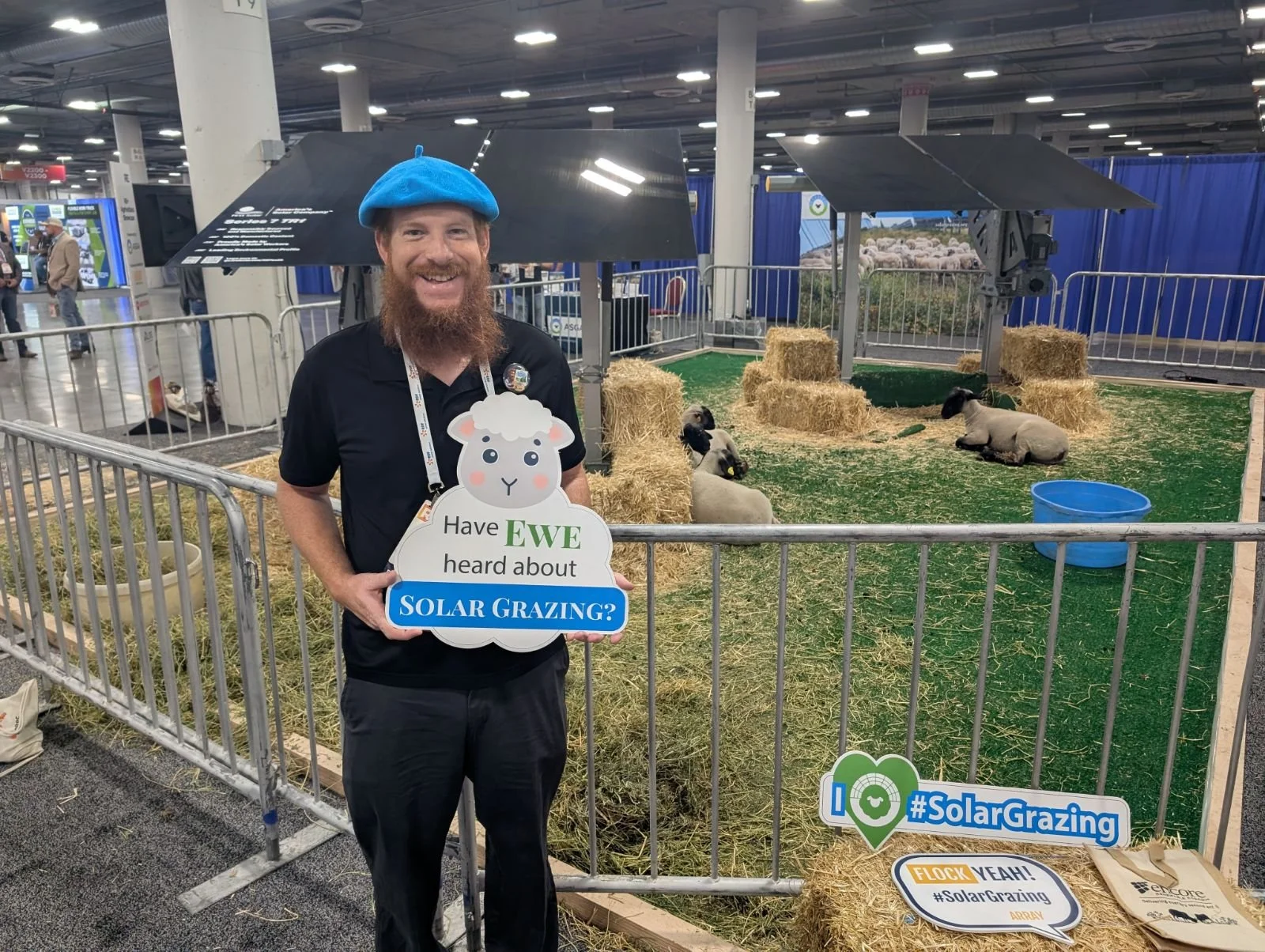
Daniel Dibble, President of Canvas Cloud, at RE+ in Las Vegas, the largest clean energy event in North America.
This summer took me from solar farms to expo floors, from local innovators to global leaders, all united by a shared mission: accelerating the clean energy transition. I had the privilege of attending three major events: ASES SOLAR 2025, the Midwest Solar Expo, and RE+ 2025. One theme in particular stood out everywhere I went: agrivoltaics.
Together, these gatherings brought thousands of industry professionals together, including the 40,000+ attendees at RE+ in Las Vegas, which is the largest clean energy event in North America. It was clear that agrivoltaics is part of a much bigger story about the future of renewable energy.
What is Agrivoltaics?
Agrivoltaics is the practice of combining solar energy with agricultural activities like crop cultivation and livestock grazing on the same land. It’s an approach that aims to maximize both energy production and land productivity.
From what I saw and learned this summer, the potential is exciting:
More efficient land use
Improved soil and water management
Ecological benefits like pollinator habitats
New revenue opportunities for farmers
Of course, every opportunity comes with challenges, things like crop selection, panel design, system costs, and long-term maintenance. But the momentum around agrivoltaics is undeniable, and the conversations at these events suggest that the industry is serious about tackling those complexities.
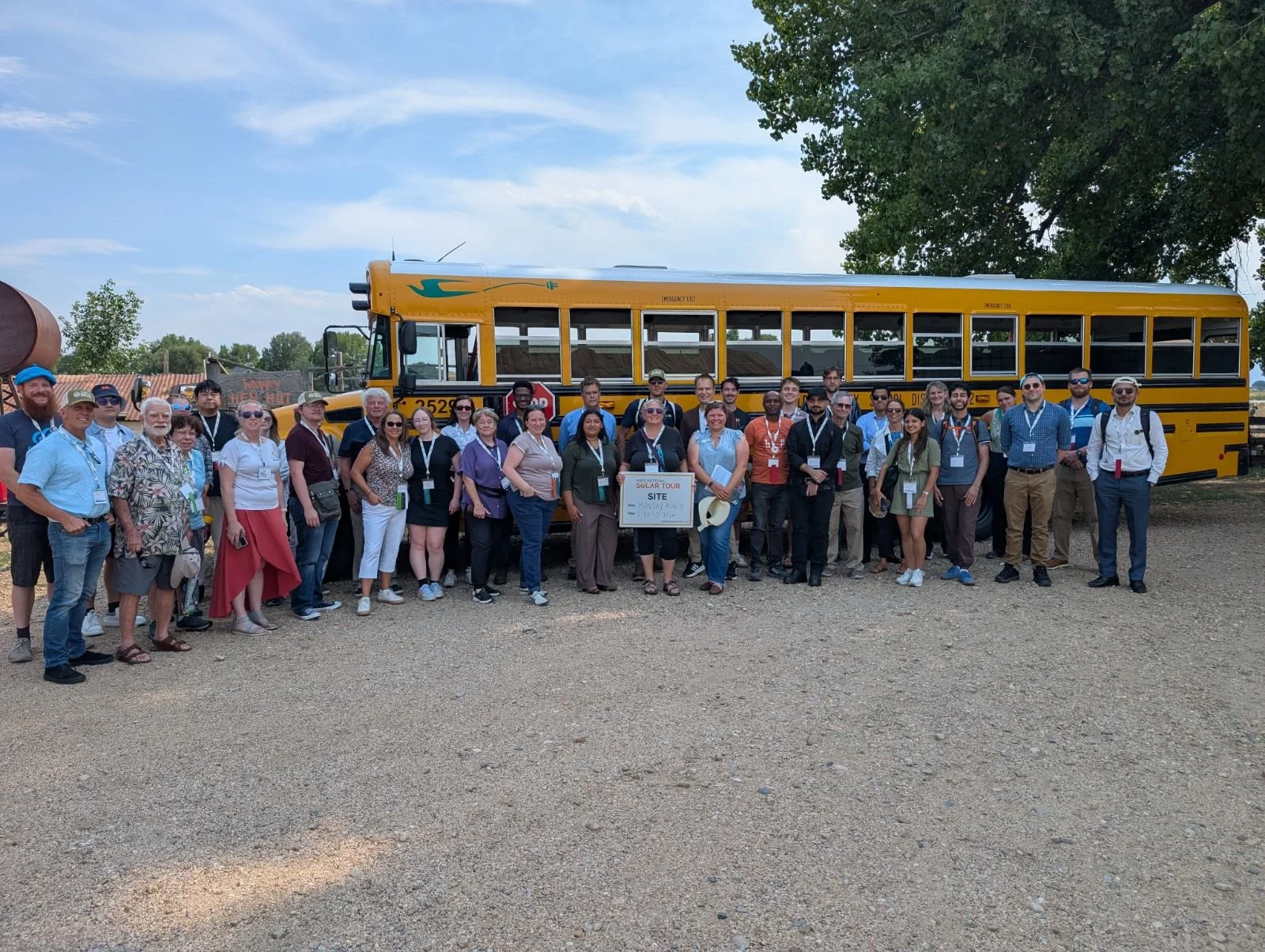
Daniel Dibble, President of Canvas Cloud, was in his signature blue beret at the American Solar Energy Society SOLAR 2025 Conference (far left). Canvas Cloud sponsored the National Solar Tour, which kicked off the conference.
Lessons from the Solar Events
ASES SOLAR 2025
Canvas Cloud was proud to sponsor the field trip to a successful agrivoltaics solar farm in Colorado, hosted by Jack’s Solar Garden, the largest commercially active agrivoltaics research site in the United States. The project combines a 1.2 MW solar array with active crop production and pollinator-friendly plantings.
Touring the site in person was eye-opening: vegetables like peppers, tomatoes, and leafy greens were thriving in the partial shade under the panels, while honeybees and pollinators worked the flowering ground cover. Overhead, clean solar energy was being generated for the local community. It wasn’t just a concept, it was a living example of innovation in action, demonstrating how farming and solar can create more value together than apart.
Midwest Solar Expo
Earlier in the summer, I joined leaders across the Midwest to talk about the practical realities of scaling solar. My biggest takeaway: it’s not just about technology, it’s about building partnerships, aligning policy, and creating a sustainable business model. (Read more in my full recap here: Canvas Cloud Blog).
RE+ 2025
Earlier this month in Las Vegas, agrivoltaics once again took center stage. RE+ is the largest clean energy event in North America, bringing together leaders from solar, storage, hydrogen, EVs, wind, and beyond. The scale alone was impressive and the conversations stretched from innovative financing models to cutting-edge grid technologies.
Agrivoltaics was part of this broader dialogue, highlighting how renewable energy is no longer a single-technology story but an interconnected ecosystem. From storage and EV infrastructure to community-scale projects, the energy was electric (pun intended!), and it was clear that collaboration will be key if we want these technologies to scale.
Local Spotlight: Agrivoltaics in Wisconsin
While national and global conversations are gaining steam, I’ve also been following how agrivoltaics is being explored closer to home. Wisconsin is emerging as a hub of research and pilot projects, with efforts from groups like OneEnergy Renewables, the University of Wisconsin–Madison, and RENEW Wisconsin.
Projects in the state are testing everything from pollinator-friendly prairie plantings to sheep grazing under solar arrays, and UW–Madison’s Kegonsa Research Campus has become a living laboratory for agrivoltaics research. These early studies are helping us understand what practices can work in Midwestern climates and soils.
For a deeper dive, RENEW Wisconsin recently published an excellent summary of ongoing projects, challenges, and opportunities: Agrivoltaics: Research and Opportunities for Wisconsin. Read more about it on the RENEW Wisconsin website.
Where Salesforce Fits In
Just as agrivoltaics pairs farming with energy, clean energy companies also need to pair innovation with strong systems. That’s where Salesforce comes into the conversation.
At Canvas Cloud, we help renewable energy and sustainability organizations get more out of their Salesforce investment by:
Managing partnerships and stakeholders with Salesforce CRM and Experience Cloud portals.
Tracking funding, grants, and incentives using Nonprofit Cloud and custom objects.
Automating outreach and donor engagement with Marketing Cloud and integrated communication tools.
Streamlining project operations and reporting with dashboards, analytics, and workflow automation.
Scaling new business lines by integrating Salesforce with financial systems, energy management platforms, and field service tools.
With the right Salesforce foundation that’s optimized for clean energy, we believe organizations can achieve sustainable growth, stronger community impact, and better alignment with their mission.
Let’s Keep the Conversation Going
Agrivoltaics may be just one piece of the clean energy puzzle, but it represents the kind of creative, collaborative thinking our industry needs. I’m excited to keep learning from others who are passionate about this space.
If you’d like to swap ideas on agrivoltaics or explore how Salesforce can support your clean energy goals, let’s connect now!
Next up for me is Dreamforce, Oct. 14-16, 2025, in San Francisco. If you’re there, look for me in my blue beret and be sure to ask for our limited-edition Canvas Cloud + Dreamforce collectible button.